When Foot Pain Feels Like You’re Walking on Bone
If every step feels sharp, bruised, or unprotected, especially under your heel or the ball of your foot, you’re not imagining it. Many patients describe this type of pain as feeling like the bone is hitting the ground.
Fat pad atrophy is a condition where the natural cushioning under the heel or ball of the foot thins or shifts, reducing shock absorption and making standing or walking uncomfortable, even with supportive shoes.
Across Los Angeles, the San Fernando Valley, and Southern California, patients often seek care after orthotics, rest, or physical therapy provide limited relief. When cushioning loss is the underlying issue, fat pad injections may be considered to restore support and improve comfort in appropriate cases.
Why this Type of Foot Pain Feels Different
Not all foot pain behaves the same way. Pain caused by fat pad loss often feels deep, bruised, or mechanical rather than sharp or burning.
The bottom of the foot contains specialized fat pads designed to absorb shock and protect the bones with every step. When these pads thin out, shift, or lose structure, pressure is no longer distributed properly. The result is pain that worsens with standing and walking, even in supportive shoes.
This is why some patients feel frustrated when traditional treatments help only slightly or temporarily.
What Is Fat Pad Atrophy?
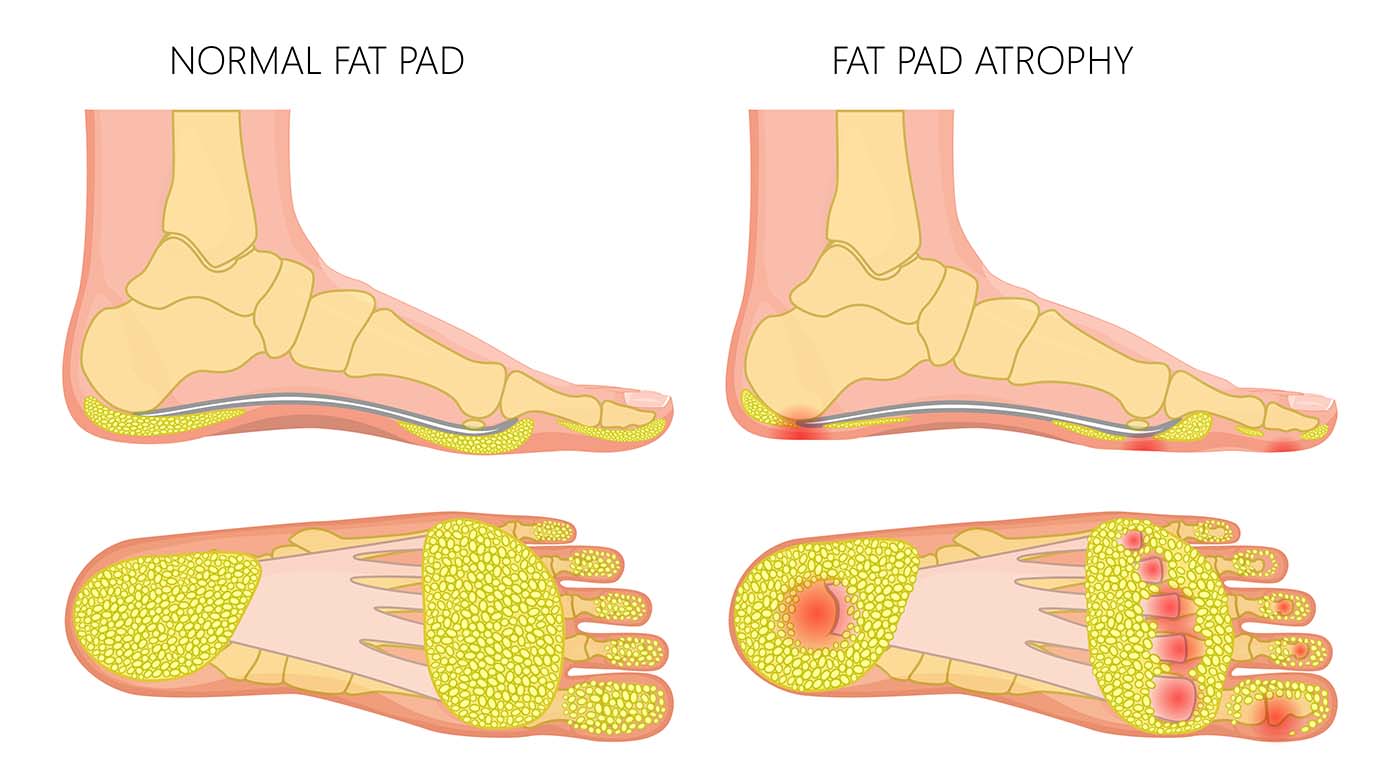
Fat pad atrophy occurs when the natural cushioning under the heel or forefoot breaks down faster than the body can rebuild it.
This can happen gradually due to aging, repetitive stress, or genetics. It may also occur after injury or foot surgery. In some cases, the fat pad doesn’t disappear entirely — it migrates away from where protection is needed most.
When this happens, patients often describe:
- Feeling like they’re walking directly on hard surfaces
- Pain that improves with rest but returns quickly
- Discomfort that doesn’t fully resolve with orthotics alone
Understanding this mechanical cause is key to choosing the right treatment.
Why Fat Pad Injections are Different from Other Treatments
Many common treatments for heel or forefoot pain focus on reducing inflammation or correcting alignment. Fat pad injections address a different problem entirely: loss of shock absorption.
Fat pad injections involve placing a cushioning material under areas where natural padding has diminished. The goal is to restore protection between the bone and the ground, reducing pressure and improving comfort during movement.
This approach is especially helpful when pain persists despite appropriate conservative care.
Types of Fat Pad Injection Materials
There isn’t a single “one-size-fits-all” injection. The right option depends on anatomy, activity level, and treatment goals.
Common options include:
- Autologous fat, transferred from the patient’s own body
- Biostimulatory fillers, which encourage collagen production over time
- Hyaluronic acid–based fillers, designed to support soft tissue cushioning
Each option has specific advantages, and careful selection helps reduce risk and improve results.
Who May Benefit From Fat Pad Injections?
Fat pad injections are most often considered when pain continues despite appropriate non-surgical care.
They are commonly used for:
- Heel pain linked to fat pad thinning, especially when plantar fasciitis treatment hasn’t fully helped
- Ball-of-foot pain (metatarsalgia), often associated with high arches or prolonged standing
- Post-surgical or post-injury changes, where cushioning has shifted or diminished
A thorough podiatric evaluation is essential to confirm whether fat pad atrophy is contributing to symptoms.
What Patients Notice After Treatment
Some patients feel improvement within days, while others notice gradual relief as the tissue settles or regenerates. Mild swelling or soreness is common but temporary.
Results vary depending on the material used, activity level, and individual healing response. In many cases, injections complement orthotics rather than replace them entirely.
When Conservative Care Isn’t Enough
Orthotics, footwear changes, and physical therapy remain important tools. However, when cushioning loss is the primary issue, external support alone may not fully restore comfort.
Fat pad injections offer a way to address the structural source of pain, not just manage symptoms.

A Thoughtful Approach to Foot Pain at SCMSC
At Southern California Multi-Specialty Center, podiatrists evaluate foot pain with careful attention to biomechanics, tissue health, and daily function.
Fat pad injections are considered only when they align with a patient’s anatomy, symptoms, and goals. This measured approach helps reduce risk and ensures treatment supports long-term mobility, not just short-term relief.
When to Consider a Podiatry Evaluation
If walking or standing feels increasingly uncomfortable, or if pain persists despite appropriate treatment, it may be time for a more detailed evaluation.
A podiatry consultation can help determine whether fat pad atrophy is contributing to your symptoms and whether injection therapy may be appropriate.
Schedule a podiatry evaluation at SCMSC to explore options for lasting foot comfort.