
When you need a specialist, not just another prescription
For a while, the heartburn was manageable. You changed what you ate, took something before dinner, slept propped up on an extra pillow. But it keeps coming back — or it's getting worse, or the medication that used to work doesn't quite work anymore — and a different question has started to form: is this still just reflux, or is it becoming something I should take seriously?
That question is the right reason to see an acid reflux specialist. Not because every case of reflux needs aggressive treatment — most don't — but because reflux that won't resolve has a specific cause, and you deserve to know exactly what's behind yours. At SCMSC, that's where care starts: with a real answer about what's going on, and a treatment plan sized to what you actually need — nothing more, nothing less.
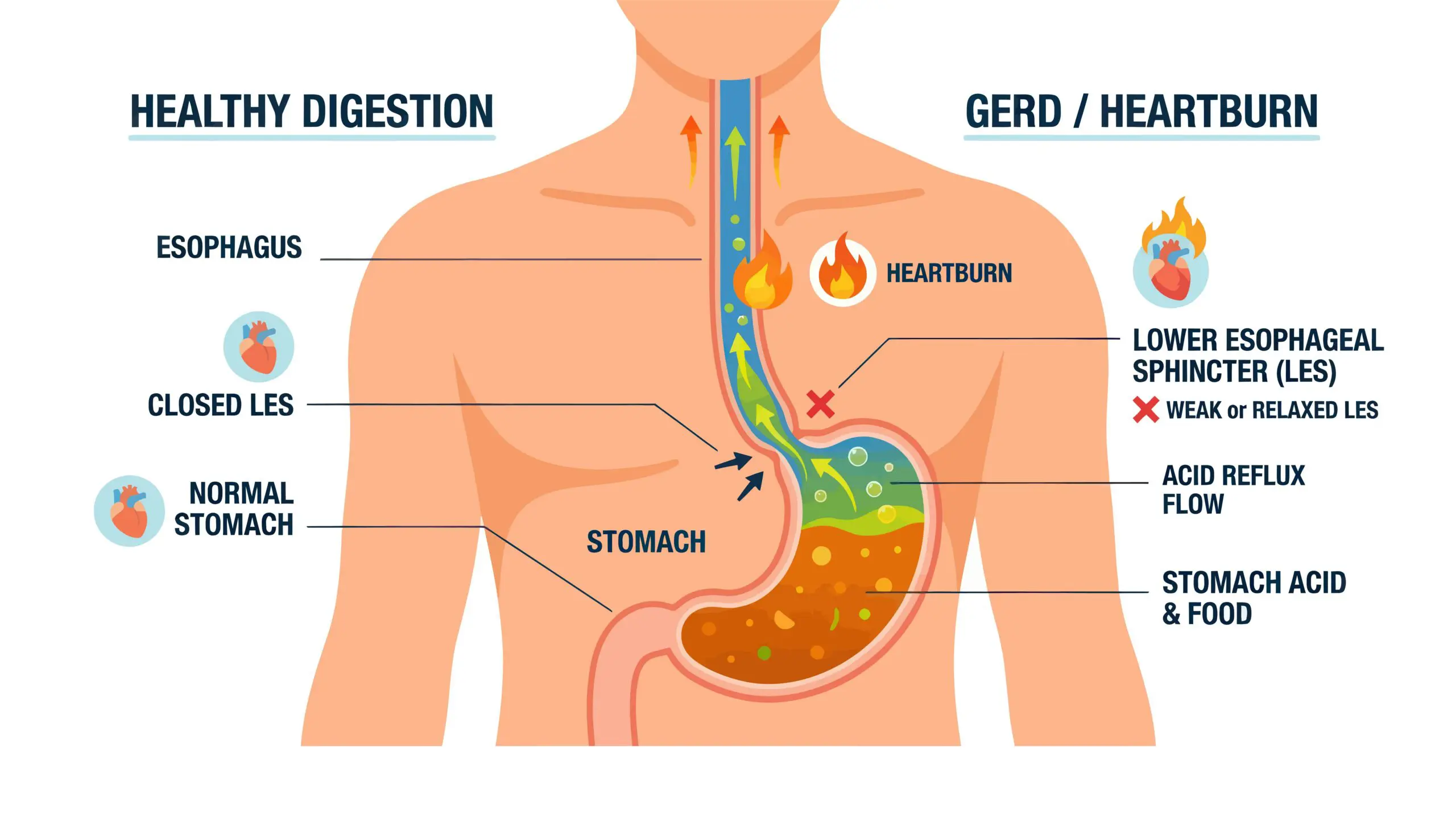
Chronic exposure to stomach acid can lead to severe health complications.
Is it still "just reflux"? Knowing when acid reflux is serious
Most heartburn is occasional and harmless. The reason to look closer isn't fear — it's that persistent reflux is highly treatable, and a few specific patterns are worth catching early.
Acid reflux, GERD, and heartburn — what the words actually mean
Heartburn is the burning sensation itself. Acid reflux is what causes it — stomach contents flowing back up into the esophagus. GERD (gastroesophageal reflux disease) is the diagnosis when that reflux happens often enough, or causes enough irritation, to be considered a chronic condition rather than an occasional nuisance. Knowing which one you're dealing with is the first step toward treating it correctly.
This page is about gastroesophageal reflux — reflux of stomach acid into the esophagus. It is a different condition from venous reflux, a circulation issue, and from esophageal varices, which are treated separately.
GERD symptoms — and the ones worth a closer look
The common signs of GERD are familiar to most people who have it: frequent heartburn, a sour or acidic taste, the feeling of food coming back up, chest discomfort after eating, and symptoms that worsen lying down or at night.
A few patterns, though, are worth a specialist's attention rather than another round of over-the-counter relief:
- The medication isn't fully controlling it anymore, or you've been on acid-reducing pills for months to years with no end in sight
- You're bringing food or liquid back up (regurgitation), not just feeling the burn
- Swallowing feels different, or food seems to catch
- A chronic cough, hoarseness, or sore throat that doesn't have an obvious cause
- Symptoms that have changed, intensified, or started waking you at night
None of these means something is wrong. They mean it's worth understanding the cause — which is exactly what an evaluation is for.
Silent reflux (LPR): when the symptom isn't heartburn
Some people have reflux without ever feeling classic heartburn. Instead, stomach acid reaches the throat and voice box, causing a chronic cough, hoarseness, throat clearing, or the sensation of a lump in the throat. This is called silent reflux, or laryngopharyngeal reflux (LPR) — and because it doesn't burn, it's often mistaken for allergies or a lingering cold. If those symptoms have stayed with you, reflux is worth ruling in or out.
Barrett's esophagus — what it is, and what it isn't
When reflux continues over a long period, the lining of the esophagus can adapt in a way doctors call Barrett's esophagus. It's a reason to be monitored, not a reason to panic: Barrett's itself is not cancer, and most people who have it never develop cancer. What it does mean is that your reflux deserves ongoing, specialist-level attention rather than indefinite self-management — so that any change is caught early, while it's most manageable.
When should you see a specialist for acid reflux?
There's no need to see a specialist for occasional heartburn. The time to go is when reflux has become a pattern your daily routine and your medication aren't resolving — because at that point, the useful question is no longer "how do I quiet the symptom today," but "what's actually causing this, and what will fix it."
Is it time to see a specialist for acid reflux?
Consider seeing an acid reflux specialist when over-the-counter or prescription medication no longer controls your symptoms, when reflux has continued for months or years, when you're regurgitating food or liquid, when swallowing feels different, or when you've been diagnosed with a hiatal hernia or Barrett's esophagus. A specialist evaluation identifies the cause and determines whether you need more than medication.
Seeing a surgical specialist does not mean you're being routed toward surgery. It means you're being seen by the kind of practice that can evaluate the whole picture and offer every level of treatment — most of which isn't surgical at all.
The full range of reflux treatment — and how we decide what you actually need
Here's the part that matters most if you've been hesitant to walk into a surgical practice: seeing a surgical specialist for reflux does not mean you're headed for surgery. Most reflux is resolved without it. The reason to come here is that SCMSC can offer the entire range of care — and is built to find the least intervention that actually fixes your problem.
First, we find the cause — we don't guess
Reflux that hasn't responded to medication is telling you something, and the right treatment depends on knowing what. Rather than cycle through another prescription, SCMSC works the condition up properly — which can include upper endoscopy to see the esophagus directly, pH and impedance testing to measure the actual reflux, and high-resolution manometry to assess how the esophagus is functioning. Finding the cause is what makes it possible to right-size the treatment.
The whole spectrum — from lifestyle to surgery, and how each fits
Once the cause is clear, the path follows it:
- Lifestyle and dietary changes — for many people, targeted changes meaningfully reduce reflux. Because diet and weight are so often part of the picture, SCMSC's in-house clinical nutrition team works directly with reflux patients — nutrition is part of the practice, not a referral elsewhere.
- Medical management — optimizing the right medication for your specific situation.
- Minimally invasive surgery — reserved for the cases that genuinely call for it: reflux that won't respond to medication, ongoing regurgitation, a large hiatal hernia, or Barrett's. When surgery is warranted, SCMSC offers modern, minimally invasive anti-reflux procedures — but it's the last tool, not the first.
When does acid reflux need surgery?
Surgery becomes a consideration when reflux is driven by something medication can't fix — a large hiatal hernia, a weakened valve between the stomach and esophagus, ongoing regurgitation, or Barrett's esophagus — or when long-term medication simply isn't holding. The decision is made from a full evaluation of the cause, never from symptoms alone, and only after the non-surgical options have been genuinely weighed.

Acid reflux that hasn't responded to medication deserves another look. SCMSC can evaluate the whole picture and offer every level of treatment — most of which isn't surgical.
Why patients bring their most stubborn reflux to SCMSC
For people in greater Los Angeles whose acid reflux hasn't resolved with medication — or who've been told their case is complicated — SCMSC offers surgeon-led evaluation and the full range of GERD treatment, from dietary and medical management through minimally invasive anti-reflux surgery. The practice diagnoses the cause before treating it, integrates clinical nutrition as part of care, and right-sizes every plan to what the patient actually needs.
If you've been dismissed before, your case still deserves a real look
Reflux that's been brushed off — or that's cycled through multiple doctors and prescriptions without resolving — is exactly the kind of case SCMSC takes seriously. The practice regularly sees patients whose conditions were called too complicated, or who simply never got a thorough answer elsewhere. A stubborn case isn't a reason to be turned away. It's a reason to be looked at carefully.
A second opinion that clarifies the cause
Many people arrive here already weighing what they've been told — to "just live with it," or to move straight to an operation. SCMSC is regularly chosen as a second or third opinion across its surgical specialties, and a reflux evaluation does one specific thing: it tells you what's actually causing your symptoms and what you genuinely need. Before you accept a diagnosis you're unsure about, it's worth knowing exactly what you're dealing with.
The same team, treating you like a person — not a chart
Chronic reflux is a relationship with a practice over time, not a single visit. At SCMSC, the clinician who evaluates you stays with you through the arc of your care, and follow-up extends well past the first appointment. Patients consistently describe being given the time their questions required and not feeling rushed — which, for a condition that's lived in the background of your life for months or years, is what makes it finally get resolved.
If you're the one researching this for a parent, a spouse, or an adult child, you'll find the same thing they will: a practice that explains what's happening clearly, includes the people who care about the patient, and is reachable in your family's language across every location.
If reflux surgery does turn out to be the answer
For the small number of patients who do need it, choosing to be evaluated at SCMSC costs you nothing — because you're already with surgeons who perform anti-reflux surgery at a high level. SCMSC's General Surgery department, led by Dr. Babak Eghbalieh, MD, FACS, Director of General and Robotic Surgery, brings extensive robotic and minimally invasive surgical experience to the cases that require an operation. When surgery is the right step, that expertise is already in place — and you can read about SCMSC's anti-reflux surgery options here. When it isn't, you'll have a clear answer and a plan that doesn't involve it.
Get a clear answer about your reflux
You don't have to decide anything except whether to get a clear answer. Your first visit is a conversation and an evaluation — understanding what's causing your reflux and what, realistically, will resolve it — not a commitment to any treatment.
Request an appointment to have your reflux properly evaluated. If you've already been somewhere else and left without a real answer, SCMSC's second-opinion evaluation is a straightforward next step. Across all five locations in greater Los Angeles, you'll see the surgeon who handles your care, in your language, from the first visit on.
Frequently Asked Questions
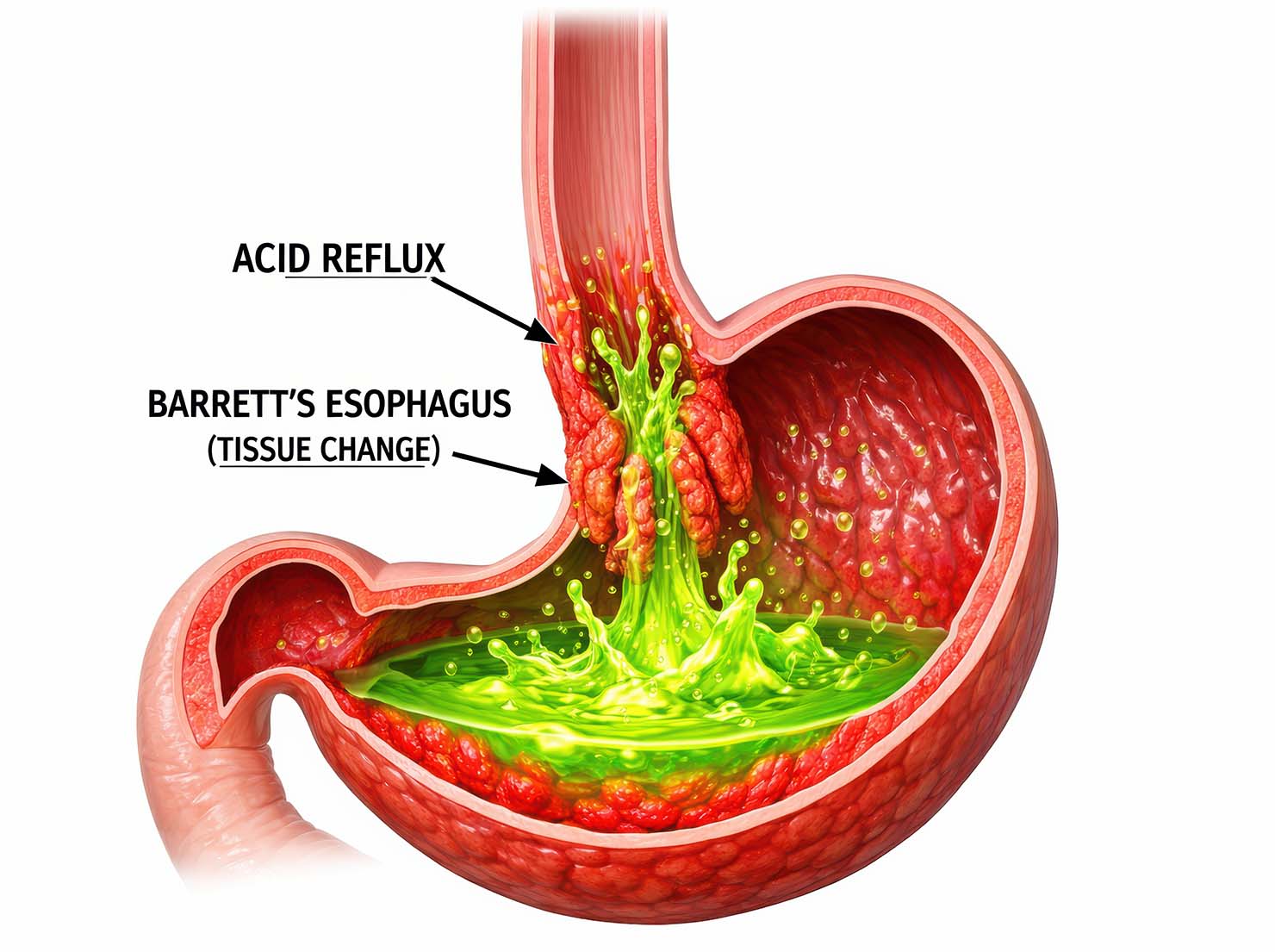
Barrett's esophagus is a condition in which the lining of the esophagus (the tube connecting your mouth to your stomach) becomes damaged by chronic acid reflux. It is typically a complication of long-standing gastroesophageal reflux disease (GERD)
What is the difference between acid reflux, GERD, and heartburn?
Heartburn is the burning sensation. Acid reflux is the cause — stomach contents flowing back into the esophagus. GERD (gastroesophageal reflux disease) is the diagnosis when reflux is frequent or irritating enough to be a chronic condition rather than an occasional nuisance.
Can acid reflux be cured without surgery?
For most people, yes. The majority of reflux is controlled with dietary changes, weight management, and the right medication. Surgery is reserved for cases where reflux is driven by something medication can't resolve, or where long-term medication isn't holding. A proper evaluation determines which situation applies.
What is Barrett's esophagus, and is it cancer?
Barrett's esophagus is a change in the esophageal lining caused by long-term reflux. It is not cancer, and most people with it never develop cancer. It does mean reflux should be monitored by a specialist so any change is caught early.
What is silent reflux (LPR)?
Silent reflux, or laryngopharyngeal reflux (LPR), is reflux that reaches the throat and voice box without causing classic heartburn. It can show up as chronic cough, hoarseness, throat clearing, or a lump-in-the-throat sensation, and is often mistaken for allergies.