Choosing the right surgeon for your Whipple
Have you or a loved one been told that you need a surgical procedure called a “whipple?”
And if you're doing this research for someone you love (a parent, a spouse, a child), you're carrying a lot right now. This page is for you, too.
That question deserves a clear answer. At Southern California Multi-Specialty Center (SCMSC), the Whipple procedure is performed by Dr. Babak (Bobby) Eghbalieh, MD, FACS. The pancreas is his focus, not an occasional case: he leads the pancreatic surgery program at Providence Holy Cross Medical Center, trains other surgeons across the country on the robotic surgical system, and helped establish the first Pancreatic Cancer Center of Excellence in Los Angeles, designated by the National Pancreas Foundation and one of only three in California. An operation this demanding asks for a surgeon whose hands stay practiced in it, and who treats the person in front of him, not just the diagnosis.
If you're deciding where to have your Whipple done, or whether it's truly your best path forward, a second-opinion consultation is often the clearest next step.
What a Whipple procedure is
A Whipple procedure, also called a pancreaticoduodenectomy, removes the head of the pancreas along with the duodenum (the first part of the small intestine), the gallbladder, and part of the bile duct, then reconnects the digestive tract so it works again. It's most often performed to treat cancer or tumors of the pancreas, bile duct, or duodenum. It's one of the most complex operations in abdominal surgery, which is exactly why the surgeon's experience matters so much.
At SCMSC, Whipple surgery is performed in Los Angeles by Dr. Babak (Bobby) Eghbalieh, who specializes in the robotic, minimally invasive approach. The Whipple has traditionally been an open operation; the robotic approach is a more recent, minimally invasive advance for the patients who are candidates for it.
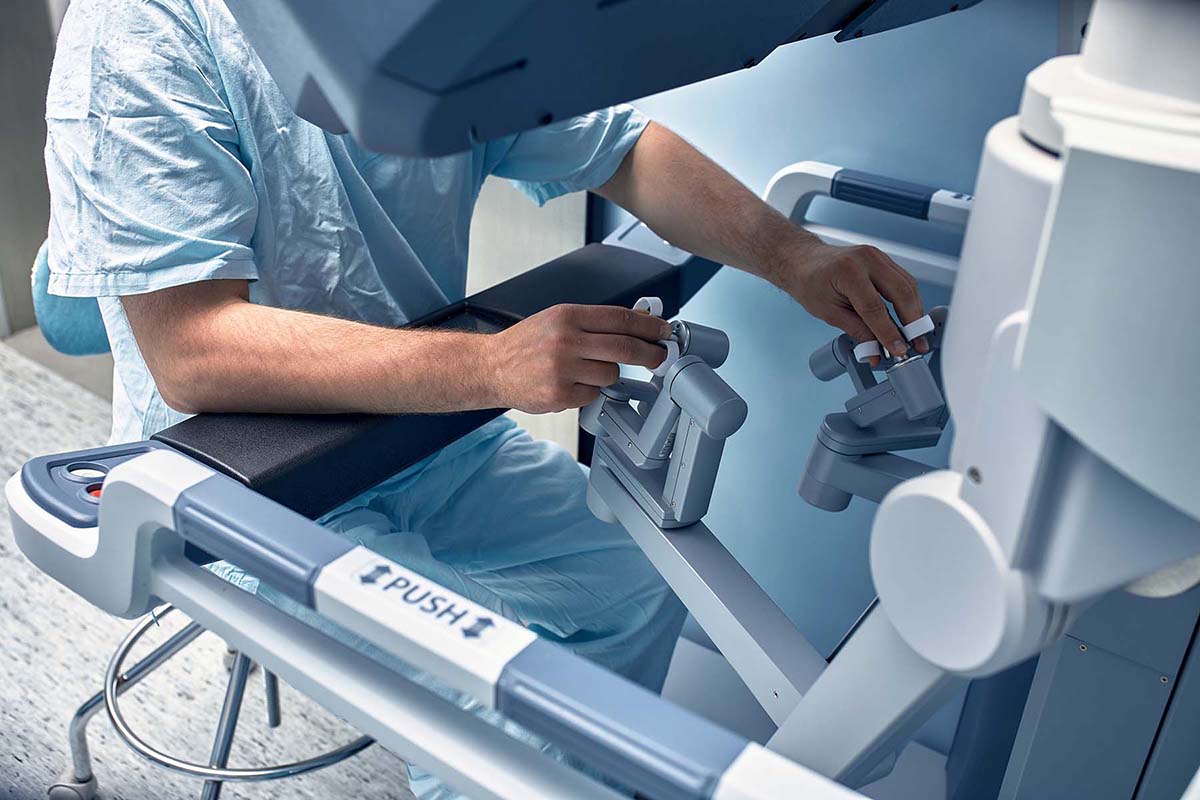
Robotic Whipple surgery: a more precise operation
When it's the right fit, a robotic Whipple can mean less blood loss, smaller incisions, less scarring, and a faster return home, without giving up any of the thoroughness this operation demands. It isn't the right approach for every case, and a straight answer about whether it's right for yours is part of what a consultation with Dr. Eghbalieh gives you.
Dr. Eghbalieh has performed more than 16,000 operations, including over 3,300 robotic surgeries, more than any other general surgeon in the greater Los Angeles area. He operates at a da Vinci Robotic Surgery Epicenter, one of only twenty in the country, and directs robotic surgery at Providence Holy Cross Medical Center. For an operation where experience is directly tied to outcomes, that volume isn't a credential on a wall. It's the difference between hands that have done this many times and hands that haven't.
Is robotic surgery better for a Whipple procedure?
Robotic surgery isn't automatically better for every Whipple, but when a patient is a good candidate it can reduce blood loss, scarring, and recovery time compared with traditional open surgery. The right approach depends on the individual case, which is why it's decided with an experienced surgeon, not assumed in advance.
If you've been told your case is too complicated
Some patients come to SCMSC after being told elsewhere that their case is too advanced, too complex, or not worth operating on. Those are often exactly the cases worth a second look from a surgeon who performs this operation regularly. A complicated case deserves real evaluation, not a deflection. Dr. Eghbalieh takes on complex pancreatic cases and second and third opinions, and will give you a straight answer about what's actually possible.
Care that continues long after surgery
A Whipple is one chapter in a longer story, and at SCMSC the same surgeon who meets you carries you through it, performing your operation and following your recovery well beyond the standard post-operative visit.
If your treatment involves more than surgery, it stays under one roof. SCMSC was founded by three brothers, each leading a surgical specialty, and they coordinate cancer care directly: Dr. Navid Eghbalieh's interventional radiology, including Y90 treatment; Dr. Sammy Eghbalieh's chemotherapy port placement; and Dr. Bobby Eghbalieh's surgery, supported by an in-house clinical nutrition team that helps prepare you for surgery and recover from it. For a diagnosis that touches your whole life, that coordination means you're not managing handoffs between strangers.
And your family is part of this. Dr. Eghbalieh communicates with the people who matter to you before, during, and after surgery, because a decision this large is rarely one a patient carries alone.
It's also what patients tend to describe afterward: not the procedure itself, but the feeling of being treated as a person rather than a case. They describe a surgeon who took the time to explain, who didn't rush them, who remembered the details of their situation, and who was still checking in months down the road. For a decision this large, that matters more than most people expect.
Decide with confidence: A second opinion at SCMSC
If you've already been scheduled for a Whipple elsewhere, or you're simply not sure, a second opinion is one of the most useful steps you can take. At SCMSC, that means an experienced pancreatic surgeon reviews your case directly and tells you, honestly, what he sees: whether a Whipple is the right path, whether a less invasive option fits, and, if surgery is right, how to give you the best possible version of it.
Patients regularly come to SCMSC for a second or third opinion on complex pancreatic surgery. There's no pressure and no obligation, just the clarity of a straight answer from an experienced pancreatic surgeon.
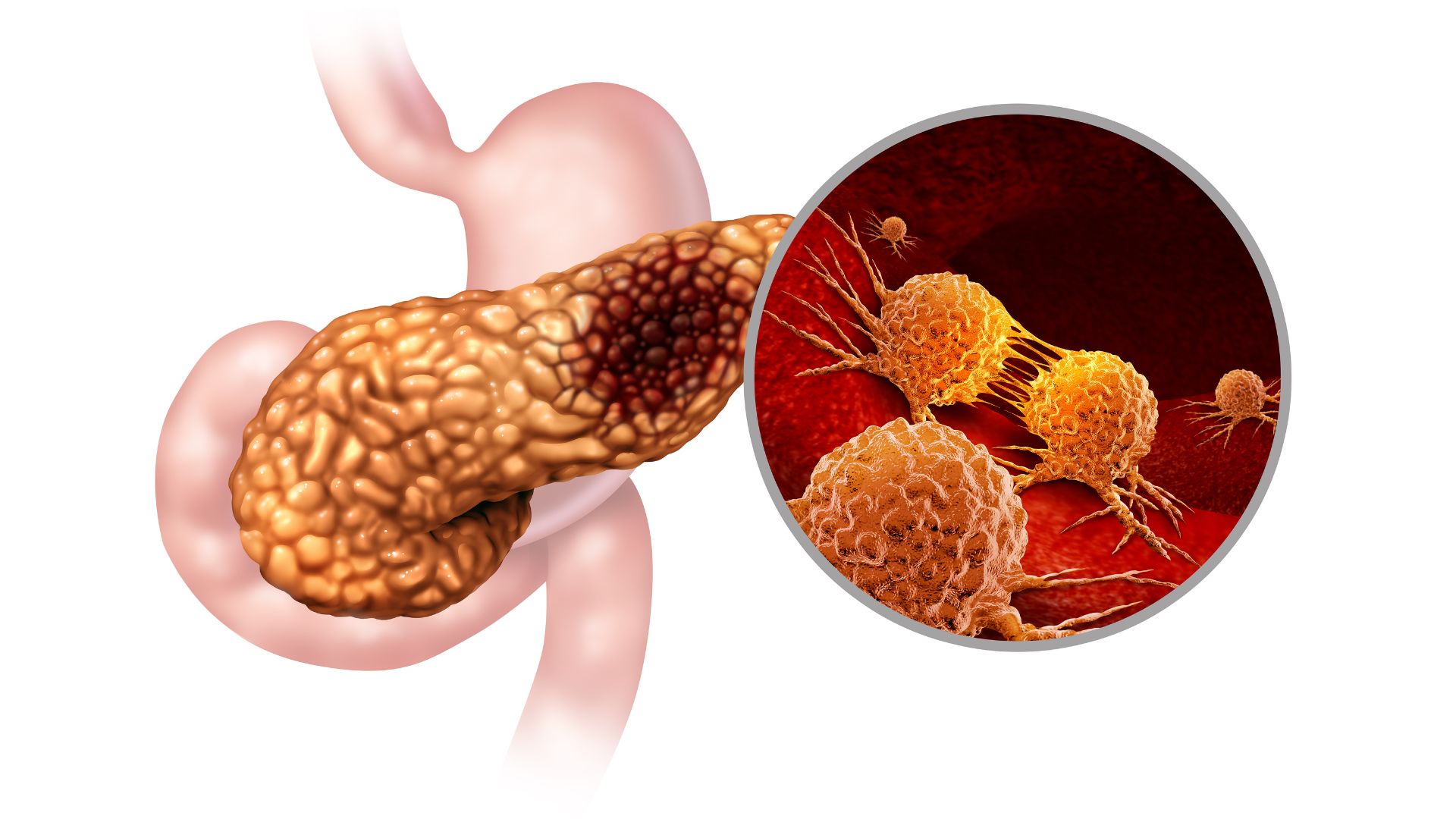
Pancreatic cancer starts in the pancrease and is a serious and often deadly disease. Common symptoms may include abdominal pain, weight loss, jaundice (yellowing of the skin and eyes), and digestive problems such as nausea and diarrhea.
What is Pancreatic Cancer?
Pancreatic cancer is a type of cancer that starts in the pancreas, which is a gland located behind the stomach that produces digestive enzymes and hormones such as insulin and glucagon. Pancreatic cancer occurs when abnormal cells in the pancreas grow and divide uncontrollably, forming a mass or tumor.
Pancreatic cancer is a serious and often deadly disease, with symptoms that may not appear until the cancer is advanced. Common symptoms of pancreatic cancer include abdominal pain, weight loss, jaundice (yellowing of the skin and eyes), and digestive problems such as nausea and diarrhea.
There are several types of pancreatic cancer, including the most common type, pancreatic ductal adenocarcinoma. Other less common types include neuroendocrine tumors and pancreatic acinar cell carcinoma.
Treatment for pancreatic cancer may include surgery, chemotherapy, radiation therapy, or a combination of these approaches. The treatment plan will depend on several factors, including the type and stage of the cancer, the patient's overall health, and their personal preferences.
Early detection and treatment of pancreatic cancer can improve the chances of successful treatment and long-term survival.
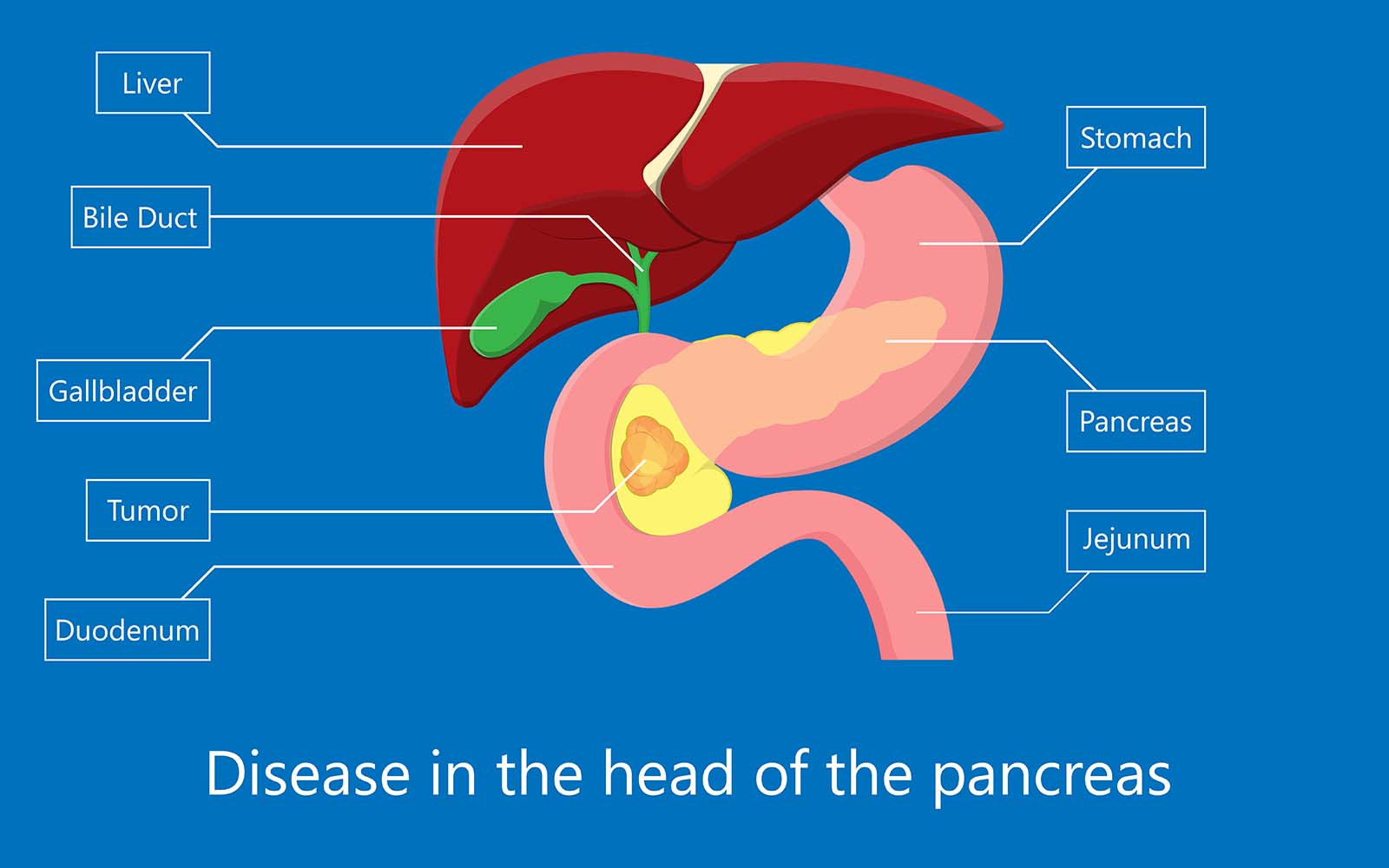
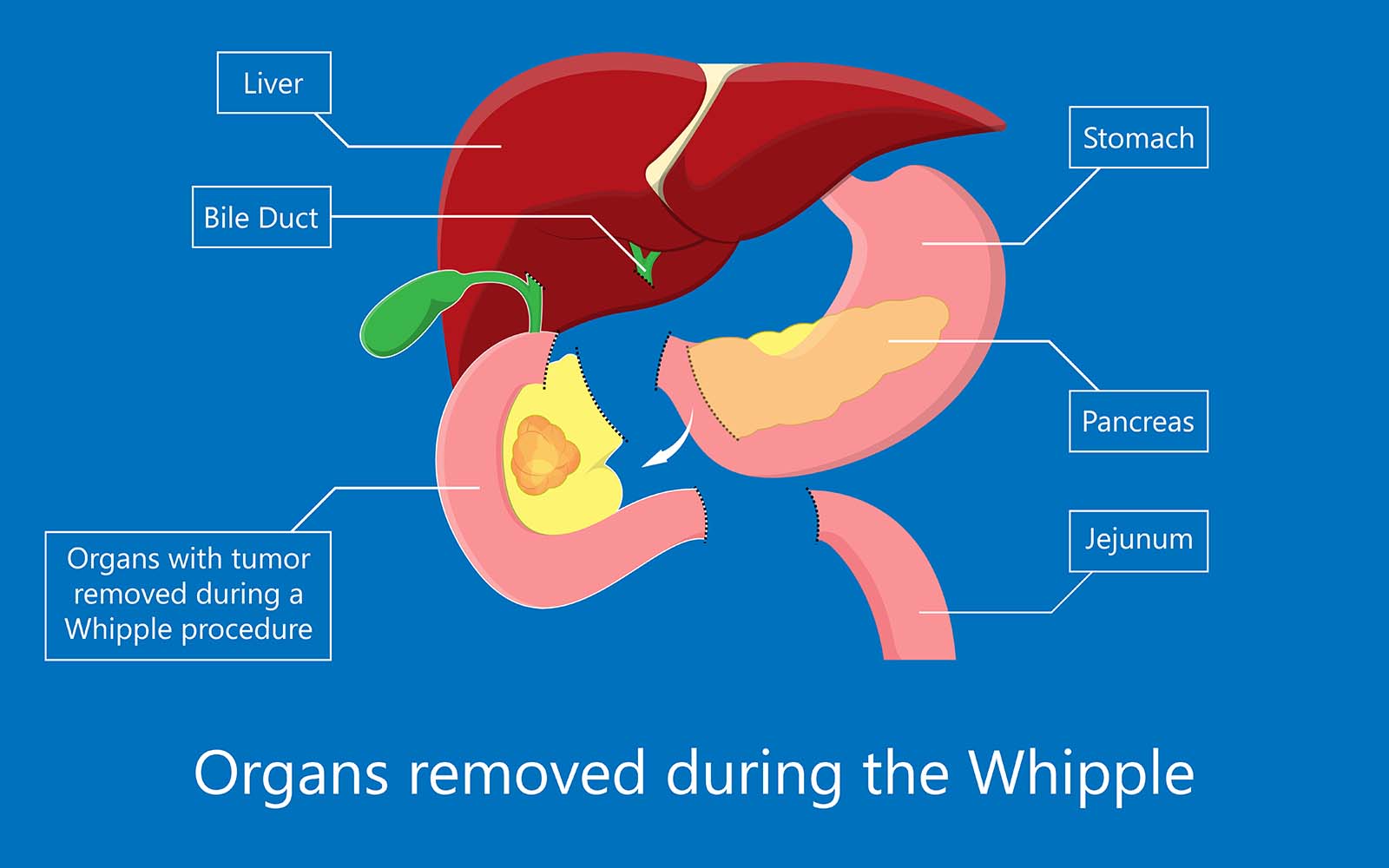
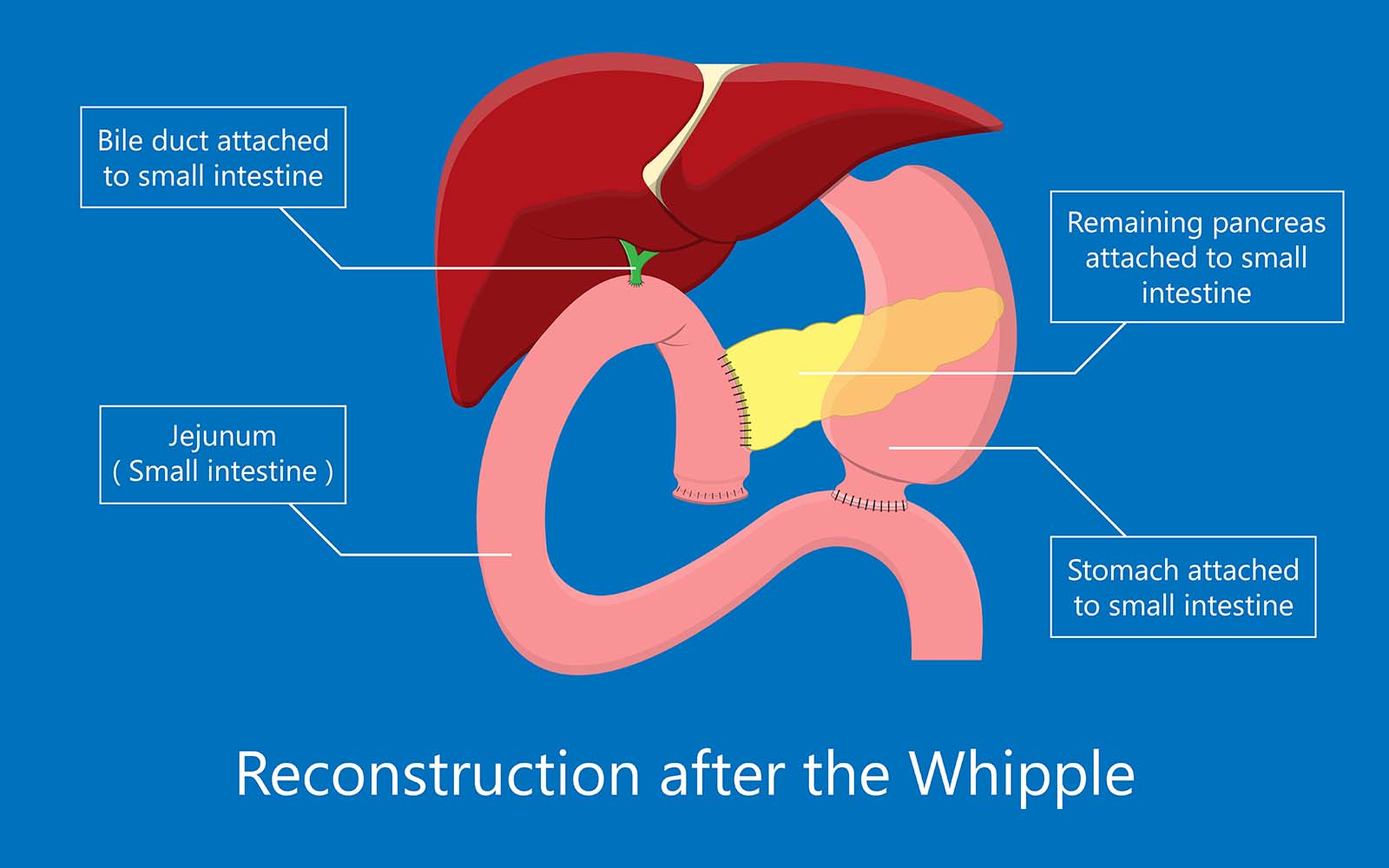
Illustrations detailing the Whipple surgery procedure.
Understanding the Whipple Procedure
If you want to understand the operation itself in more detail, here's a fuller picture of what it involves, who it's for, and what recovery is like.
What the Whipple procedure involves
The Whipple procedure, also known as pancreaticoduodenectomy, removes the head of the pancreas, the first part of the small intestine (the duodenum), the gallbladder, and the common bile duct, along with nearby lymph nodes when needed. The surgeon then reconstructs the digestive tract so the body can process food again. It is a demanding operation that, on average, takes around six hours, and most patients stay in the hospital for one to two weeks afterward. For many patients with cancer of the pancreas or surrounding structures, it is a life-saving operation.
Conditions treated with the Whipple procedure
While pancreatic cancer is the most common reason for a Whipple, the procedure treats a range of conditions affecting the pancreas, bile duct, and duodenum:
- Pancreatic cancer
- Pancreatic cysts
- Pancreatic tumors
- Pancreatitis
- Ampullary cancer
- Bile duct cancer
- Neuroendocrine tumors
- Small bowel cancer
- Trauma to the pancreas or small intestine
- Other tumors or disorders involving the pancreas, duodenum, or bile ducts
If you're researching the disease itself, you can learn more about pancreatic cancer and how it's diagnosed and treated.
Who is a candidate for a Whipple procedure?
A Whipple is generally considered for patients whose tumor is confined to the head of the pancreas, or the nearby bile duct or duodenum, and hasn't spread widely. Whether it's the right operation depends on the type and stage of disease and the patient's overall health, which is what a surgical evaluation determines. And if you've been told elsewhere that you aren't a candidate, that is often still worth a second opinion.
Preparing for your Whipple surgery
Preparation is thorough, because going into the operation well-prepared improves recovery. It typically includes:
- Medical evaluation: a full assessment of your health and imaging to plan the operation
- Nutritional assessment: because nutrition before surgery affects how well you recover, SCMSC's clinical nutrition team is involved early
- Bowel preparation, as directed by your surgical team
- Fasting before surgery, per your team's instructions
- Consent: a clear conversation about the procedure, the plan, and what to expect
What is recovery like after a Whipple procedure?
Recovery varies from patient to patient, depending on overall health and the extent of the operation. Most patients spend one to two weeks in the hospital, where care focuses on monitoring, pain management, IV fluids and nutrition, wound care, and getting you moving again. Walking early is encouraged, because it helps recovery and lowers the risk of complications. After discharge, recovery continues for several weeks to a few months, and it's normal to experience fatigue, weakness, and digestive changes as your body adjusts. Because digestion changes after a Whipple, smaller and more frequent meals are often easier at first, and SCMSC's clinical nutrition team helps you through that adjustment with the nutritional support recovery can require. At SCMSC, follow-up continues well past the first post-operative visit. Your surgeon stays involved through the arc of your recovery.
Survival rates and outcomes
Outcomes after a Whipple have improved meaningfully over the years, and the evidence consistently shows that results are strongest when the operation is performed by experienced, high-volume surgeons. What a Whipple means for any individual depends on the type and stage of disease and overall health, which is part of what Dr. Eghbalieh will discuss with you directly, in the context of your specific situation, rather than as a statistic.
Potential complications
As with any major operation, a Whipple carries risks, which your surgical team will discuss with you in full. They can include:
- Bleeding
- Infection
- Pancreatic fistula (leakage where the pancreas is reconnected)
- Delayed gastric emptying
- Digestive changes
- Diabetes
- Blood clots
- Respiratory problems
Experienced surgical teams manage these risks closely, another reason the surgeon's volume and the practice's follow-up matter.
Whipple Surgery Q&A

Surgeons can treat pancreatic cancer using the Whipple surgery procedure, also known as a pancreaticoduodenectomy. It may be performed as a traditional open procedure or as a robotic surgery.
Is the Whipple procedure an open or minimally invasive surgery?
The Whipple can be performed as a traditional open operation or with minimally invasive techniques, including robotic and laparoscopic approaches. At SCMSC, Dr. Eghbalieh specializes in the robotic, minimally invasive approach to the Whipple. When the robotic approach is appropriate for a patient's case, it can mean smaller incisions, less scarring, and a faster recovery.
Is the Whipple procedure recommended for all pancreatic cancer patients?
No. The Whipple is recommended for a select group of patients, primarily those whose tumor is in the head of the pancreas without widespread metastasis. Whether it's the right operation depends on the cancer's stage, the patient's overall health, and the absence of extensive disease spread, which a surgical evaluation determines.
Who performs the Whipple procedure at SCMSC?
The Whipple procedure at SCMSC is performed by Dr. Babak (Bobby) Eghbalieh, MD, FACS, Director of Hepatobiliary and Pancreatic Surgery and Director of Robotic Surgery at Providence Holy Cross Medical Center. He helped establish the first Pancreatic Cancer Center of Excellence in Los Angeles, designated by the National Pancreas Foundation, and trains other surgeons on the da Vinci robotic surgical system.
Is robotic Whipple surgery available in Los Angeles?
Yes. SCMSC offers robotic Whipple surgery in Los Angeles for appropriate candidates. Dr. Bobby Eghbalieh has performed more than 3,300 robotic surgeries; when robotic surgery fits a patient's case, it can mean smaller incisions, less scarring, and a faster recovery.
Can I get a second opinion on a Whipple procedure at SCMSC?
p>Yes. SCMSC is regularly chosen for second and third opinions on Whipple and complex pancreatic surgery. An experienced pancreatic surgeon reviews your case directly and gives you a clear, honest assessment of your options, with no pressure or obligation.
What conditions does the Whipple procedure treat?
Beyond pancreatic cancer, the Whipple procedure treats bile duct cancer, ampullary cancer, neuroendocrine tumors, pancreatic cysts, chronic pancreatitis, small bowel cancer, and trauma to the pancreas or duodenum.
How long does a Whipple procedure take?
A Whipple is a lengthy operation, usually taking around six hours, because of how complex and precise it is. The exact time depends on the individual case and whether it's performed open or robotically. Most patients then stay in the hospital for about one to two weeks as recovery begins.
Who is not a candidate for a Whipple procedure?
A Whipple generally isn't recommended when cancer has spread well beyond the pancreas and nearby structures, or when a patient's overall health would make major surgery and recovery unsafe. Candidacy depends on the type and stage of disease and your general health, which a surgical evaluation determines. And if you've been told elsewhere that you aren't a candidate, that is often still worth a second opinion from a surgeon who performs this operation regularly.
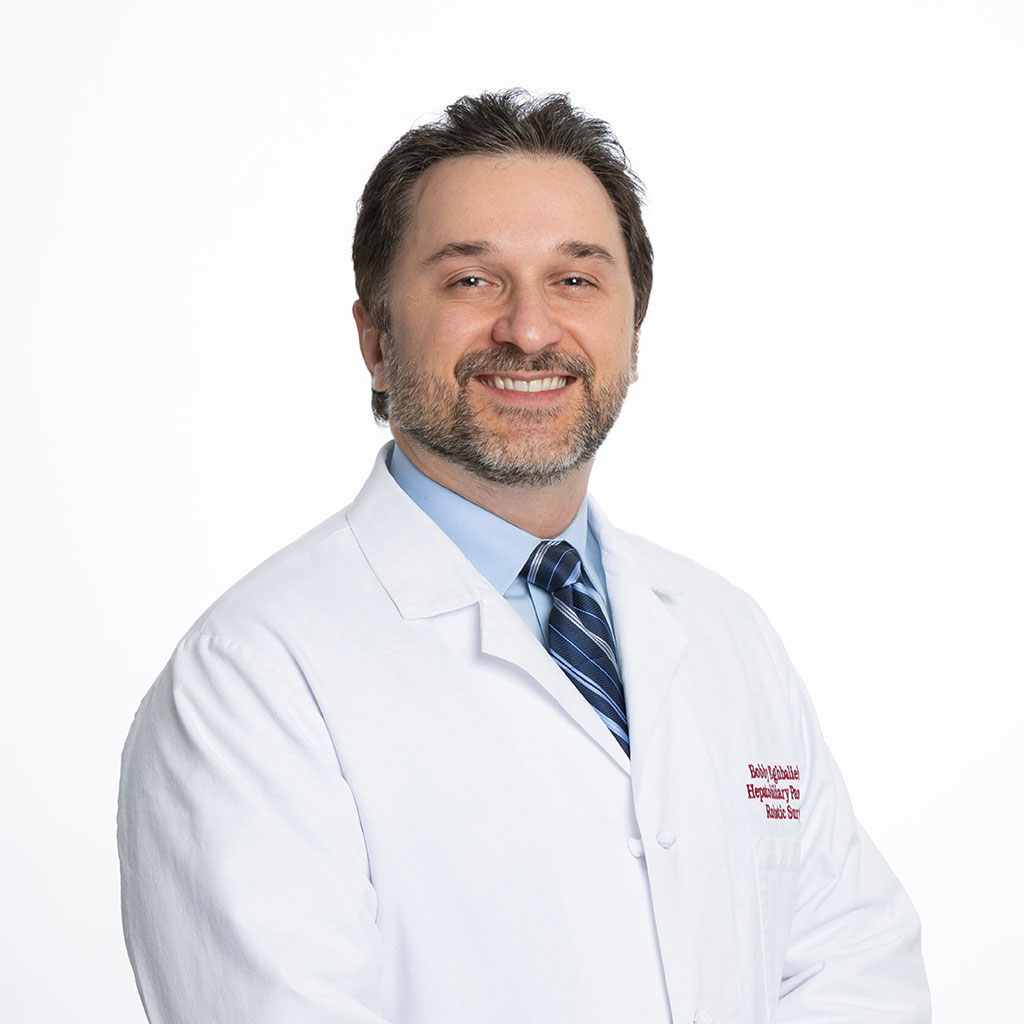
Dr. Babak (Bobby) Eghbalieh, M.D., FACS, is a renowned board-certified surgeon, who specializes in hepatobiliary pancreatic and general surgery with advanced training in robotic surgery.
Talk With Dr. Eghbalieh
Whether you're choosing where to have your Whipple, getting a second opinion, or just trying to understand your options, the next step is a conversation. We'll make it straightforward.